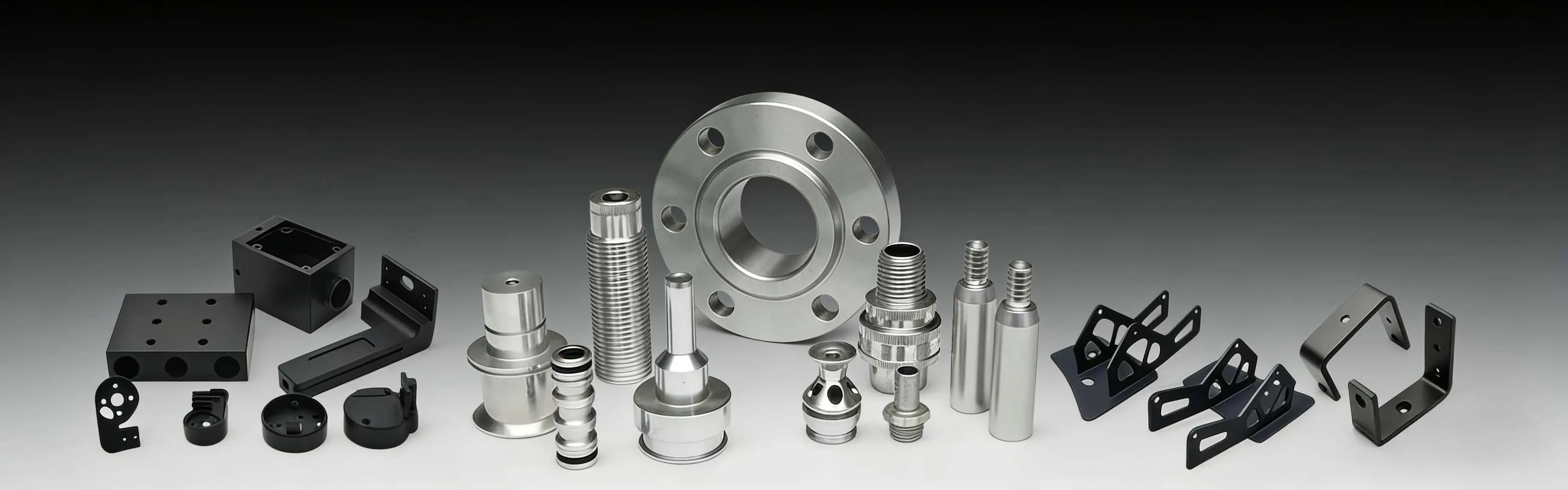
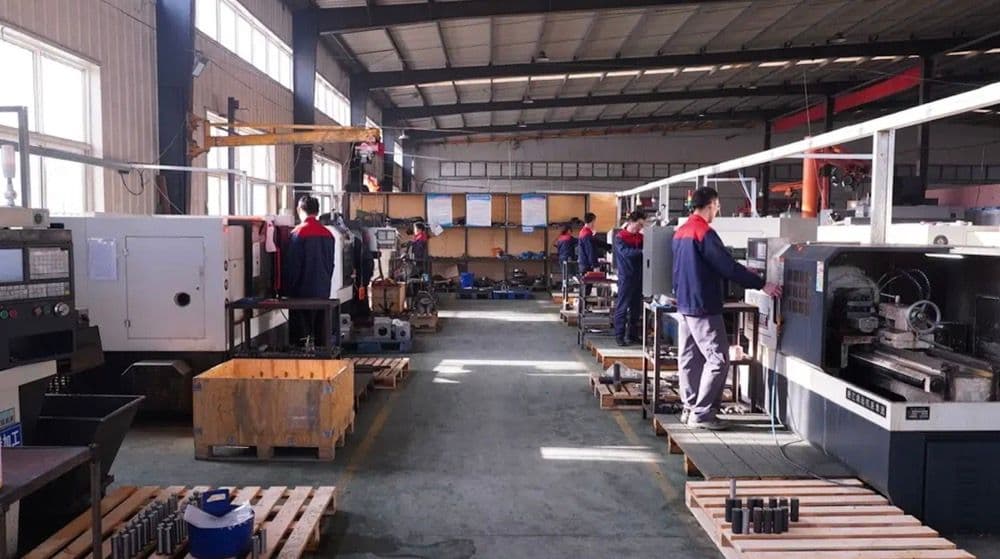
Jinan Xinling is equipped with professional and advanced CNC turning equipment, which can undertake all kinds of high-precision turning processing business. The tolerance of our products is strictly controlled to ±0.05mm and higher precision, and we support customized non-standard parameters. Relying on years of precision machining accumulation, we are skilled at manufacturing all kinds of complex shaped turned parts.
We have a wide range of machining specifications: not only can we produce millimeter-level miniature parts, but also can undertake large and heavy workpieces with a length of 1500mm and a diameter of 700mm.
Whether it is a standard conventional parts, or difficult and complex customized parts, we will combine your technical requirements and cost budget, customized cost-effective machining solutions, stable delivery of high-quality CNC turned products!
How does CNC turning work?
Jinan Xinling Machinery Equipment Manufacturing Co., Ltd. possesses mature, high-precision CNC turning capabilities and can customize various types of metal CNC turned parts. Workpiece tolerances are strictly controlled within ±0.05 mm, and we support ultra-high-precision custom manufacturing to meet the requirements of precision equipment.
With years of experience in precision machining, we possess proven processing technologies for complex irregular parts and large workpieces. Our processing capabilities are extensive, ranging from mini and small precision parts to large CNC turning projects with lengths up to 1,500 mm and diameters up to 700 mm.
We specialize in CNC turning, precision custom turning, and contract manufacturing services for hardware and mechanical components, covering a variety of materials including carbon steel, stainless steel, and alloys. Whether for standard, simple parts or highly complex custom specifications, Jinan Xinling can tailor cost-effective machining solutions based on your dimensional requirements and budget, providing a stable supply of high-quality CNC-turned products to customers worldwide.
CNC Turning Service: High Precision Parts Machining Solutions
In the field of modern precision manufacturing, CNC turning services have become an indispensable process for the machining of high-precision parts. Whether in aerospace, automotive manufacturing, medical devices, or the electronics and automation machinery industries, CNC turning plays a critical role in both product quality and production efficiency
Xinling specializes in high-quality CNC turning services. Leveraging advanced equipment, proven processes, and a rigorous quality control system, we provide customers with one-stop manufacturing solutions—from material selection and surface treatment to precision tolerance control.
Materials We Can Machine
We operate a fleet of over 10 lathes capable of machining a wide range of metallic and non-metallic materials, including aluminum, steel, brass, copper, bronze, magnesium alloys, zinc alloys, and tungsten, to meet the custom requirements for aerospace, electronic, and industrial components. We also support the machining of engineering plastics such as ABS, POM, PTFE, and PEEK.
Surface treatment directly affects a product’s corrosion resistance, wear resistance, and service life. We offer a variety of surface treatment solutions, including anodizing, sandblasting, and polishing, to meet both functional and aesthetic requirements.
Under standard turning conditions, surface roughness can reach up to Ra 0.8, meeting the requirements of most industrial parts.
Surface Finishes
Features
Applicable Materials
Anodizing
Improves corrosion resistance; available in multiple colors
Aluminum Alloy
Powder Coating
Wear-resistant, corrosion-resistant, and highly decorative
Metal Parts
Sandblasting
Removes tool marks and creates a matte finish
Metal Parts
Polishing
Improves surface finish, achieving a mirror-like effect
Stainless Steel / Aluminum
As-machined condition
Retains tool marks, lowest cost
All materials
Our Turning Tolerance Standards
In the field of CNC turning, we provide stable and reliable precision machining services. Tolerances for metal parts can reach ±0.005 inches, while tolerances for plastic parts are ±0.05 inches.
Processing capabilities: Maximum turning diameter 0.3 mm–3600 mm, maximum cutting length 0.5 mm–1500 mm, capable of meeting the machining needs for both small precision parts and large shafts and discs.
Note: Actual machining capabilities are subject to material, structure, and process constraints; we can support customized high-precision solutions.
Why choose Jinan Xinling Precision Machining for CNC turned parts?
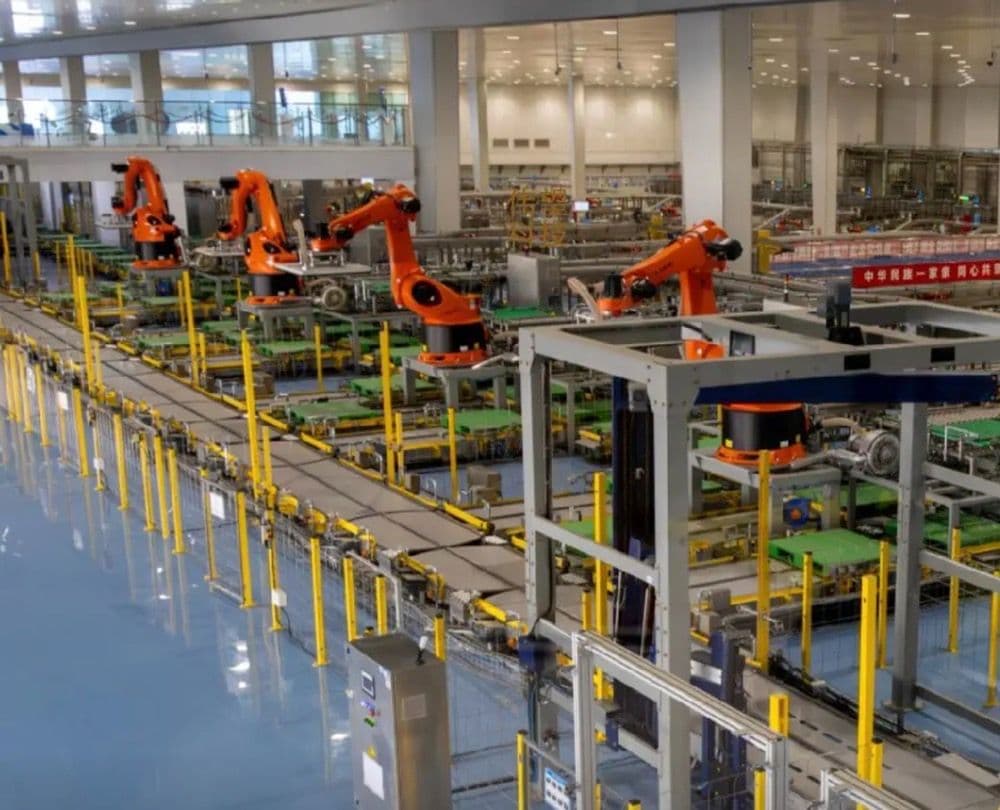
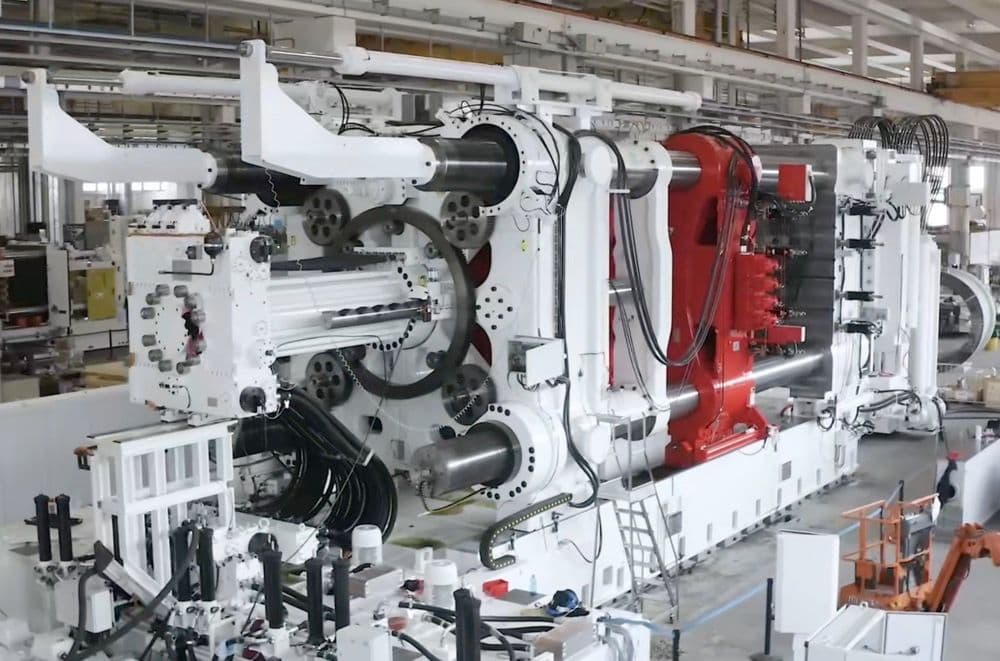
Our workshop is equipped with more than 20 kinds of CNC turning machines.
Extra-long specification CNC lathe with a maximum length of 16 meters
Large horizontal lathe, specializing in heavy-duty shaft workpiece machining
CNC machining centers for complex non-standard parts.
Turning and milling centers that support full-process machining in a single clamping.
High Precision Grinding Machines
We are equipped with 10 high precision grinding machines
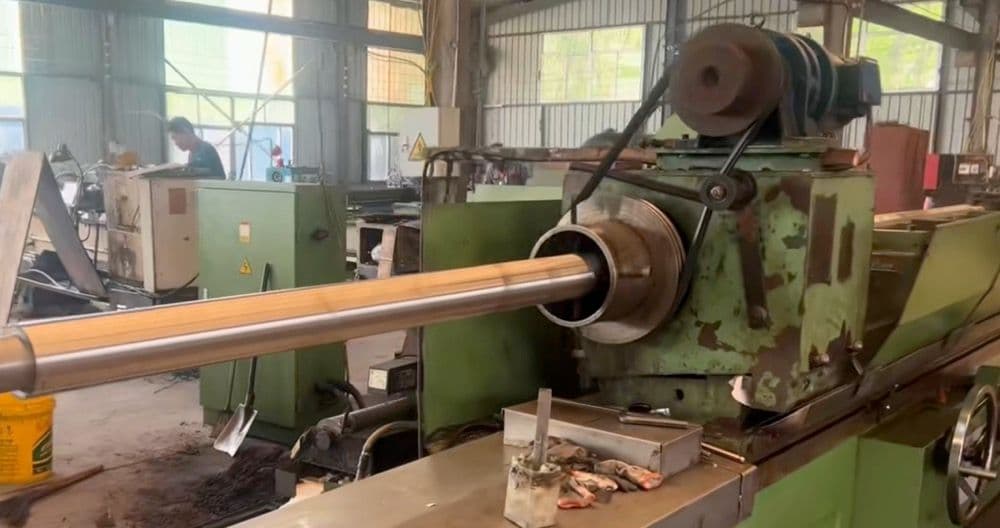
Cylindrical grinding machines with a maximum working length of 8 meters for precision grinding of long shafts;
High-precision surface grinding equipment to ensure the dimensional accuracy and surface quality of workpieces.
Grinding machine engineer for more than 30 years, able to process any kind of shaft products
Enhance the surface finish, dimensional accuracy and wear-resisting and anti-corrosion properties of workpieces, effectively extending the service life of products.
CNC Turning Application Areas
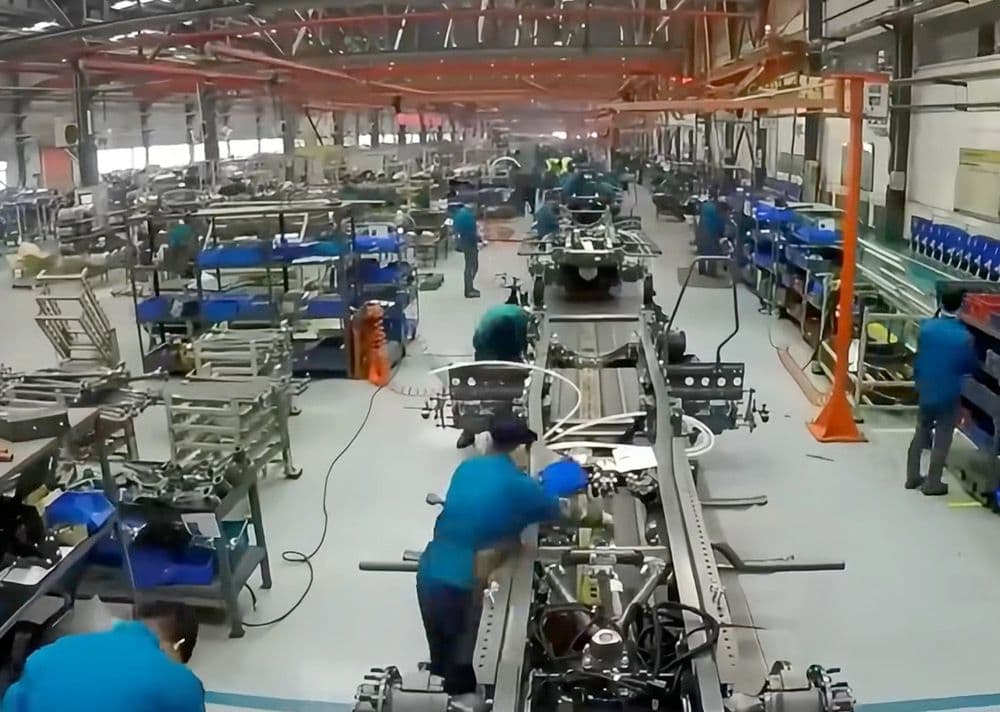
Our CNC turning services are widely used in many industries for all kinds of precision parts machining, supporting from prototyping to mass production.
Auto Parts
For machining of shafts, connectors and precision structural parts, requiring high accuracy and consistency.
machinery and equipment
Used for all kinds of mechanical equipment parts processing, such as shafts, bushings, flanges, etc.
automation
Precision parts machining for automated equipment, supporting complex structures and mass production.
medical equipment
Suitable for high-precision machining of small parts with high dimensional and surface requirements.
Electronics/communications equipment
For joining, structural and precision metal parts machining
Industrial equipment
Suitable for machining internal structural and functional parts of all kinds of industrial equipment.
Welcome to send us your drawings and technical specifications.
Jinan Xinling will provide you with professional manufacturing advice and competitive quotes.